

Structural Wall Reinforcement for Cantilevered Stairs
Pre-war buildings and older NYC construction often need wall reinforcement before a floating stair can be safely installed. We assess, engineer, and execute the reinforcement so the cantilever performs correctly.
At New York Floating Stairs , wall reinforcement is not a separate service we bolt onto a project after problems are discovered during installation. It's something we assess and plan for before a single component is fabricated.
NYC pre-war buildings — brownstones, tenement conversions, older masonry structures — have wall assemblies that weren't designed for cantilevered point loads. Timber balloon framing, irregular stud spacing, and masonry infill all behave differently than modern light-frame construction. We evaluate what's actually in the wall during site assessment, then specify reinforcement that matches the existing conditions.
Reinforcement strategies vary depending on the wall type. For timber-framed walls, we typically add blocking and ledgers engineered to distribute cantilever loads across multiple framing members. For masonry walls, we use epoxy-set anchor systems rated for the required tension and shear forces. Both approaches are specified with engineering backup, not field guesswork.
The reinforcement scope is included in the DOB permit package. Plan examiners want to see connection details and load paths — not just a note that "wall reinforcement will be provided." We document the approach thoroughly so there are no questions during permit review.
Some clients come to us after a previous contractor told them their wall couldn't support a floating stair. We frequently find that the wall can support it with proper reinforcement — the previous contractor just didn't want to do the engineering work to figure out how.
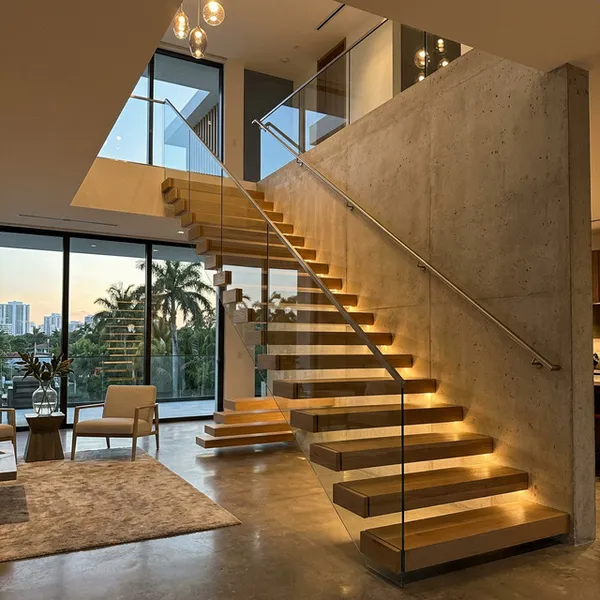
Know what's in your wall before you build
Free site visit to evaluate wall conditions and define what reinforcement is actually needed.
FAQ: Wall Reinforcement
Does every floating stair in NYC need wall reinforcement? +
How do you know what's inside the wall? +
Does wall reinforcement significantly increase project cost? +
Can wall reinforcement be done in occupied apartments? +
Will reinforcement damage the finished wall surface? +
Need a wall assessment before your floating stair?
Free site visit to evaluate wall conditions and define what reinforcement is actually required for your project.